NMN for Runners Australia: Endurance, Recovery and the NAD+ Edge
June 3, 2026 · Nadovia Research Team

Running Performance Guide · Updated June 2026
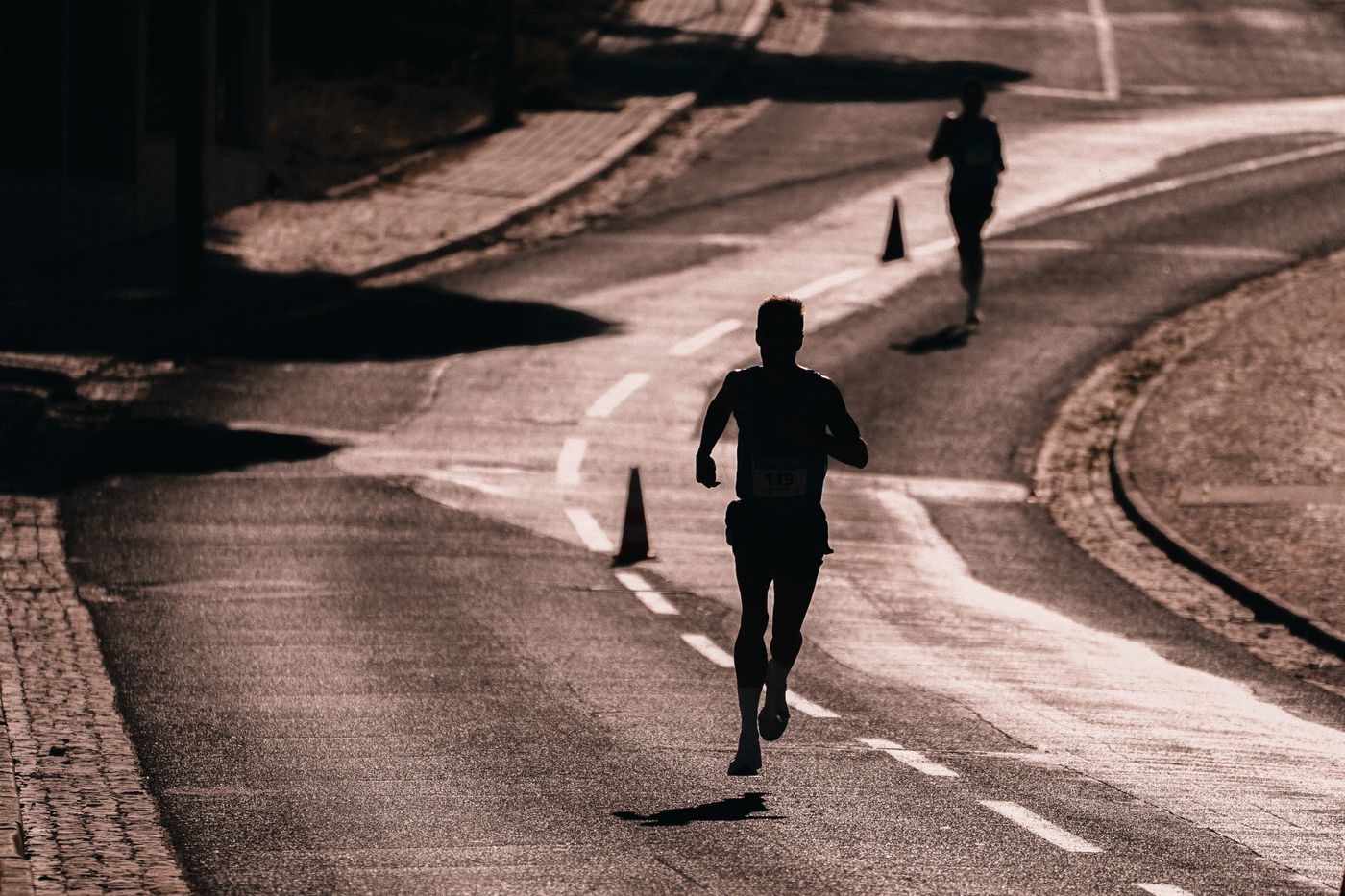
Running is Australia's most participated recreational sport. And a pattern repeats in every parkrun, fun run, and marathon field across the country: runners over 40 who notice their pace is holding but their recovery is lengthening. The effort feels the same. The bounce-back takes longer.
There is a specific cellular mechanism behind this observation — and a published clinical trial that directly addresses it. NMN for runners is not a general wellness supplement angle. It targets the precise mitochondrial decline that limits endurance performance as you age.
Contents
The Mitochondrial Mechanism Behind Running Performance Decline
Running performance — particularly endurance — is primarily determined by mitochondrial efficiency. Your mitochondria convert oxygen and fuel (glucose, fatty acids) into ATP — the energy that powers muscle contraction. The more efficiently your mitochondria do this, the more work you can sustain at a given heart rate, and the higher your effective VO2 capacity.
NAD+ is the central coenzyme in the mitochondrial electron transport chain. It accepts electrons from metabolic processes and carries them to the respiratory complexes that generate ATP. More NAD+ = more efficient electron transport = more ATP per unit of oxygen = better running economy.
As NAD+ declines by ~50% between your 20s and 60s, mitochondrial efficiency declines proportionally. Runners over 40 often experience this as: the same effort feels harder, the recovery takes longer, and training adaptations come more slowly — not because they are less fit, but because the cellular machinery converting their fitness into performance is running at reduced capacity.
The Running-Specific Clinical Trial
This is the most directly applicable evidence for runners. Liao et al. (Nature Aging, 2021) conducted a randomised, placebo-controlled study of trained amateur runners — the first human trial specifically examining NMN's effect on running performance.
Protocol: 300mg NMN daily for 12 weeks. Amateur runners aged 27–50. Placebo-controlled design.
Key findings:
- Significant improvement in aerobic capacity — runners in the NMN group reached higher workloads at the same relative oxygen cost
- Improved skeletal muscle oxygen utilisation — measured by near-infrared spectroscopy (NIRS), showing muscles were extracting more oxygen from blood during effort
- Improved gene expression for mitochondrial biogenesis in muscle — suggesting NMN was supporting the creation of new mitochondria, not just fuelling existing ones
- Enhanced subjective endurance — participants reported reduced perceived exertion at equivalent workloads
- Effect was most pronounced in participants over 40
The mechanistic explanation aligns precisely with the theory: more NAD+ → more efficient electron transport → more ATP per oxygen unit → better running economy, particularly in age-depleted mitochondria.
NMN and Post-Run Recovery
Recovery — the limiting factor for training frequency in runners over 40 — is where many Australian runners report the most noticeable NMN benefit. The mechanism is direct: post-run soreness and fatigue result from:
- Exercise-induced oxidative damage to muscle fibres
- Energy depletion in mitochondria depleted by sustained effort
- Inflammatory response to micro-tears
All three of these processes are NAD+-dependent. DNA and cellular repair (PARP enzymes), mitochondrial energy restoration, and sirtuin-regulated inflammatory response all require adequate NAD+. Runners with depleted NAD+ recover more slowly because the cellular repair processes are running at reduced capacity.
Most runners on NMN report recovery changes from weeks 3–5. The soreness after a hard long run that would previously require 2–3 days of recovery clears in 1–2. The ability to run again sooner, more frequently, without accumulating fatigue is the most commonly reported subjective benefit for active people.
Is NMN Legal in Athletics?
Yes. NMN is not on the WADA Prohibited List and is not banned by Sport Integrity Australia or Athletics Australia. It is a naturally occurring molecule found in food, classified as a dietary supplement, and legal at all competition levels — recreational parkrun through to elite athletics.
Protocol for Australian Runners
- Dose: 300–500mg beta-NMN daily. The running trial used 300mg; broader NAD+ restoration evidence supports 500mg for more pronounced mitochondrial benefits.
- Timing: Morning with first meal — consistent with circadian NAD+ rhythm. Not pre-run acutely (it does not work like a pre-workout).
- Formula: The Longevity Complex (NMN + Quercetin for post-run inflammation, TMG for methylation) is the more comprehensive choice for active runners. Quercetin specifically has published evidence for post-exercise anti-inflammatory support.
- Timeline: Give it 8–12 weeks. Recovery improvements typically emerge first (weeks 3–5). Performance changes in time trial effort and pace metrics typically weeks 6–10.
FAQ
Does NMN improve running performance?
A published RCT (Liao et al., Nature Aging, 2021) found 300mg NMN daily significantly improved aerobic capacity, oxygen utilisation, and endurance in amateur runners over 12 weeks. Effects were most pronounced in runners over 40.
How long does NMN take to improve running?
Recovery improvements typically emerge weeks 3–5. Performance changes (pace at effort, perceived exertion) typically weeks 6–10. The full 12-week trial protocol is the evidence-backed evaluation window.
Is NMN banned in running competitions?
No. NMN is not on the WADA Prohibited List and is not banned by Sport Integrity Australia or Athletics Australia. Legal at all competition levels.
What is the best NMN for runners in Australia?
Nadovia's Longevity Complex — 500mg NMN + Quercetin (anti-inflammatory for recovery) + Resveratrol + TMG + B12. The complete formula for active runners. Published CoA, free AU shipping over $75. View →
More energy from the same oxygen. Faster recovery. More running.
Nadovia Longevity Complex — the complete formula for runners over 40. Free AU shipping over $75.
View Longevity Complex →References: Liao B et al., Nature Aging (2021) — NMN running performance trial; WADA Prohibited List 2026; sportintegrity.gov.au. Not medical advice.